Find Better Catalog Listings with a Search-and-Shortlist Method
A worthwhile find is more than a low price. Use concise searches, relevant categories, measurable specifications and useful QC views to build a defensible shortlist.

An overlooked listing becomes a useful find only when it suits your requirements and gives you enough information to evaluate it. Finding that listing is less about clever search phrases than about moving deliberately from a broad result set to a small, well-documented shortlist.
Too broad a search leaves you with unrelated products. Too narrow a search can miss an item described with different seller terminology. A balanced method starts with the product family, then narrows according to evidence rather than adding an increasingly complicated sentence to the search box.
The reference Kakobuy catalog with QC resources offers a visual way to explore its collection. Use that interface for discovery while checking individual source pages and the external purchasing service separately.
Begin broad enough to recognize alternatives
Catalog search does not necessarily understand a request such as “find a lightweight black relaxed-fit jacket.” Its index may contain only a product title, short description or tags.
Start with one meaningful product term: shoes, hoodie, jacket, denim, cap, bag or jersey. If the result set is relevant, add a useful qualifier or inspect the category manually. If it is empty, try an alternative name rather than assuming that the product does not exist.
For a jacket, the next useful checks may be the intended season, dimensions and visible construction—not five more search words. The purpose of the first query is to find a workable pool, not make a purchase decision.
Narrow by requirements, not by arbitrary scarcity
Filtering succeeds when it removes unsuitable items. The smallest possible result set is not necessarily the best one.
| Stage | What to do | Decision supported |
|---|---|---|
| Product term | Use a concise name for the item | Establish a relevant initial pool |
| Category | Remove other product types | Keep comparable candidates |
| Specifications | Look for dimensions, weight and stated details | Test suitability against your requirements |
| QC evidence | Identify useful views of construction and finish | Investigate visible concerns |
| Full cost | Consider the item, service and possible freight costs | Compare value more realistically |
Not every catalog exposes these as technical filters. Where it does not, apply them manually while reading pages. Category navigation can still reduce the noise.

Avoid ranking candidates solely by low price or polished thumbnails. A cheaper listing may have different contents or dimensions. An attractive image may omit the details that matter. Use each as a reason to open the listing, not as proof that it belongs at the top.
Decide whether a listing is worth further work
An interesting page provides several independent pieces of usable information. Check the available measurements, options, material description and source details first. More fields do not prove quality, but they improve your ability to compare.
Then inspect the design according to the item type. For garments, look at silhouette, collars, cuffs, pockets, seams, fastenings and prints. Footwear calls for upper and sole shape, symmetry and visible finishing. Bags need attention to straps, edge work, fittings and attachment points.
Finally, check the variation menu. The photographed color may not be the one available in your chosen size. A set may contain a different number of pieces than you expected. Verify the specific option before keeping the item on your shortlist.
A worthwhile candidate is the intersection of suitability, sufficiently clear information and acceptable overall cost—not simply the lowest number on the page.
Review photographs for the questions they can answer
QC images can offer a grounded view of visible details, particularly when they show the unit received for your order. Historical or listing images should not be confused with your own warehouse inspection.
Adapt the review:
- Clothing: Seams, collars, graphics, labels and clear measurements.
- Shoes: Pair symmetry, panel alignment, sole junctions and visible glue residue.
- Bags: Edges, handles, straps, closures and stitching.
- Headwear: Panel shape, embroidery, structure and finishing.
Use enough angles to assess the relevant areas. Ten repetitive views are not necessarily better than a few informative ones.
Photography has limits. It cannot independently establish chemical composition, precise fabric content, future comfort or long-term performance. Lighting changes perceived shade and texture. An unseen area remains unverified even if the rest looks satisfactory.
If an unanswered question would change your decision, ask for clarification where the service allows it or compare another listing. Do not automatically give the product the favorable interpretation.
Convert sizing into a comparable record
Generic labels differ across manufacturers and batches. Record the actual relevant dimensions instead of writing only “M” or “XL.”
For tops, that may mean chest and shoulder widths, length and sleeves. For pants, compare waist, hips, rise and inseam as appropriate. For shoes, use your foot measurements and the seller's stated insole or sizing method.
A well-fitting garment you already own can be a useful reference. Measure it in the same way as the listing chart, using consistent units. If the seller's method or tolerance is unclear, note that limitation.
This turns “I normally wear medium” into a more useful question: “How do these stated dimensions differ from a garment that fits me?”
Use a small comparison set
A five-item shortlist is a practical starting point, not a rule. Select a handful of relevant candidates, then eliminate obvious mismatches before spending time on detailed research.
Move unclear variations, essential missing dimensions or visible concerns lower in the list. Compare the strongest remaining candidates on consistent criteria.
| Criterion | Useful evidence | Reason to investigate further |
|---|---|---|
| Description | Clear product identity and options | Ambiguous contents or variations |
| Inspection | Views of the important areas | Critical features never shown |
| Dimensions | Specific measurements and method | Only nominal size labels |
| Construction | Visibly consistent seams and alignment | Apparent asymmetry or finishing issues |
| Cost | A reasonable complete buying estimate | Cheap item price but unclear additional costs |
For coordinated combinations, the reference Sets category provides another route. Compare each included piece and its measurements; a single outfit image does not establish that both garments will suit you.
The point of shortlisting is to decide what deserves deeper verification. It is not an obligation to buy the winner if important questions remain unresolved.
Add the destination to the comparison
For an international buyer, value depends partly on delivery. Product weight, packed dimensions, route restrictions and taxes can change whether a promising item still makes sense.
A lightweight but bulky product can be affected by dimensional-weight billing. Footwear boxes, jackets or structured bags can influence the parcel differently from compact accessories. Obtain the available quotation rather than assuming freight is proportional only to net item weight.
Check the current requirements for the US, UK, EU, Canada, Australia, New Zealand or your actual destination. VAT, GST, import treatment, any relevant IOSS conditions and DDP or DDU terms vary by transaction and route.
For restricted, regulated or biosecurity-sensitive goods, confirm that both the destination and carrier accept the product before ordering. Inclusion in a directory is not evidence of permission to import it everywhere.
Recognize habits that hide good candidates
Long sentences can miss short seller names and tags. Start with a product term, then refine.
Price-only sorting can overlook a better-documented candidate or a difference in contents. Compare what the quoted amount actually covers.
Ignoring measurements can preserve a visually appealing item that will not suit you. Check dimensions early.
Treating marketing photographs as complete evidence leaves construction questions unanswered. Use the available QC context appropriately.
Too many open tabs make consistent comparison difficult. Remove clear mismatches and keep notes for the remaining few.
Finally, forgetting delivery can make an apparent bargain less attractive once packing, service charges and destination costs are included.
Search questions answered
What is a quick way to begin a large product search?
Use the nearest category and a concise term such as “jacket” or “bag.” Add a qualifier only when it helps narrow relevant results.
What makes an item a hidden gem rather than simply cheap?
It should satisfy your requirements, provide usable specifications and inspection evidence, offer the required variation and remain reasonable in complete cost.
Do QC images establish complete quality?
No. They support review of visible features and defects. They cannot prove properties requiring testing or extended use.
Should I retain my usual clothing size?
Only if the dimensions and intended fit support that choice. The label alone is not a reliable comparison across different manufacturers.
Is the listing with the most photographs better?
Not necessarily. Relevant views matter more than quantity. Consider whether the photographs show your specific questions and whether they represent your ordered unit.
Should shipping be considered before selecting an item?
Yes. Destination restrictions, packed size and route costs can affect suitability and value. Do not leave essential delivery questions until after purchasing.

End with a shortlist you can explain
A deliberate search moves from a broad product word to comparable candidates, then to verified options, dimensions and visible evidence. Keep unknown details visible and account for the external buying process. The result is not merely a collection of interesting links; it is a small group of products whose strengths and limitations you can actually describe.
Explore Kakobuy
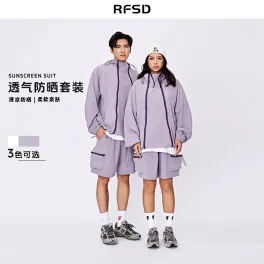
RFSD 2025 Lightweight Sun Protection Windbreaker Jacket

ACNE STUDIOS Smiley Chunky Sneakers Off-White Leather Unisex

AOBINKA Grey Cotton Floral Hooded Cardigan, Unisex Cozy

Denim Tears 3D Floral Hoodie - Grey Unisex Streetwear

SUPREME Vintage 90s Distressed Light Blue Denim Jeans Unisex

Gucci Brown Diamond Knit Cardigan | Women's Vintage Wool
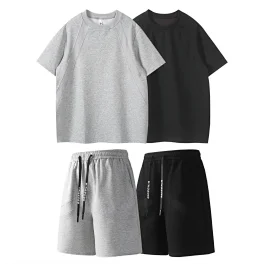
MINGBOSS Men's Summer Tracksuit: Cotton-Blend Shorts & Tee Set

Nike Classic Red Cotton Tee: Breathable, Minimalist Logo Design

Ralph Lauren Grey Cotton Baseball Cap | Unisex Summer Hat

YEEZY Bright Yellow EVA Clog Sandals: Unisex Summer

STUSSY Surf Landscape Long Sleeve Tee: 90s Streetwear

Balenciaga Unisex Cotton Striped White Shorts | Summer Casual

STUSSY Black Hooded Jacket: Windproof, Warm, Unisex Streetwear

Gucci Light Blue Knit Cardigan: Soft, Warm Women's Sweater

Amiclams Cream Hoodie: Unisex Cotton Sweatshirt with Red Heart
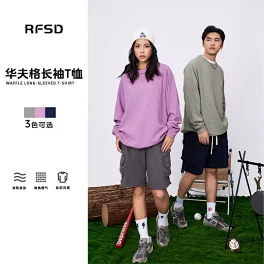
RFSD 2025 Waffle Knit Long Sleeve T-Shirt for Men & Women

ESSENTIALS Off-White Fleece Cargo Pants, Distressed Knee, Unisex

Birkenstock Fleece Sandals: Cozy Winter Unisex Shoes

Canada Goose Light Blue Down Jacket: Unisex Winter Coat

STUSSY 90s Vintage Black Puffer Jacket - Unisex Winter Hooded Coat
ESSENTIALS Off-White Fleece Cargo Pants, Distressed Knee, Unisex

Amiclams Red Wool High-Neck Sweater | Unisex Winter Warm

Arc'teryx Gray Wool Beanie: Unisex Winter Knit Hat